
Home | Kaverri | Hemanta Kumar Gupta | Kalpana Gupta | The Trust | The Award | The Jury | Rules & How to Apply | News | Contact Us
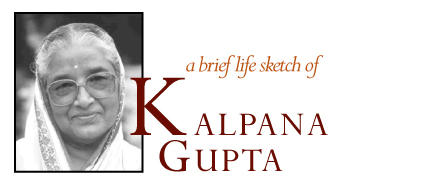
Kalpana Barua (Makon) was born on 8th June 1924 at Shillong. She was the second daughter of Bhairab Chandra Barua and Swarnalata Barua – a pious and revered couple from the Assamese Community of Shillong. She was the grand-child of Sangeet Acharya Lakshmi Ram Barua.
After her Schooling in Shillong, Guwahati and Sibsagar Kalpana plunged into the “Quit India Movement” in Sibsagar, Assam. She was instrumental in the formation of “Banar Sena”. She formed “the temporary hospital” to tend to the injured during the British torture on the Freedom Fighters who participated in rallies in Sibsagar. Her active role in various ‘civil disobedience’ actions led to her externment from Sibsagar.
She returned to Shillong and got involved with Congress party activities. She represented Khasi and Jaintia Hills in the The All Assam Womens’ Conference at Guwahati in November 1946 and The Asom Pradeshik Mahila Samity, Conference which was held at Jorhat from 26th April 1947.
During the election of 1945, she met Hemanta Kumar Gupta, Secretary, and Dist. Congress Committee and was united in wedlock on 26th November 1948. It was truly an amalgamation of Cultures.
After her marriage, she was a constant support to Hemanta in all his socio-cultural activities. She remained a staunch Congress worker and was involved with Women and Child Welfare activities.
After Hemanta passed away in a tragic accident on 7th January 1960, while covering the Bye-Election at Cherrapunjee, Sri Ashok Sarkar offered her the responsibilities that her husband had carried. This was a tribute which the Ananda Bazar Group paid to Hemanta for his dedicated service for establishing; developing and popularizing the two newspapers in North East India Kalpana willingly accepted the challenge and took over the responsibility of the Shillong office of Ananda Bazar Patrika and Hindustan Standard from 1st February 1960.
Though until then a housewife, Kalpana devoted herself into the new job as a journalist and spent sleepless nights empowering herself as she learnt the craft by reading and re-reading the press releases that her husband had written.
Within seven days after joining work, she sent articles and advertisements collected for an eight page special supplement on “Assam Industries” for the issue of The Hindustan Standard published on 12th February 1960.
Like her husband Hemanta, she was a keen observer of the developments of North East India and reported all events, developments, matters of concern involving the North East India to the Hindustan Standard and the Ananda Bazar Patrika.
During the Chinese Aggression, the then Home Minister Sri Lal Bahadur Shastri said. “The news and concerns published in Hindustan Standard had proven to be true and that ‘keeping pace with the newspaper was difficult” Most of the news from the Eastern frontier was sent by Kalpana.
Some other important news sent by Kalpana were among others about , Dhana- the slavery in Cooch Behar, the massacre at Chayantazo, the exodus of the Tibetan refugee to India for a safe home , the war of 1965 in the Eastern frontier, the corruption at the refugee camps after the Bangladesh War,etc.
Kalpana was involved in the socio-cultural life of Shillong. She was the person in-charge of Sri Aurobindo Path Mandir, the President of the Civil Defence Welfare Society formed after the 1965 wars. She was the Convener of Congress Women’s Wing of Khasi Jaintia Hills. She was actively involved with the welfare activities for Women and Child Development. She was the Government’s representative in the governing body of Laban Bengali School, Lady Keane College and the Shillong College.
Kalpana was awarded the Tamrapatra by Smti Indira Gandhi for her participation in the freedom movement. On the occasion of the 50th anniversary of the country’s independence, she was also given an award by the Govt. of Meghalaya.
Kalpana Gupta was the first lady journalist of the North Eastern India and was felicitated at the function to celebrate 150th Year of Journalism in the North East.
After retirement, Kalpana settled down in Shillong and kept her involvement with the socio-cultural life of Shillong. She visited America twice and once to England. She also visited Bangladesh after its liberation in 1971.
After a brief illness, Kalpana passed away on Bijoya Dashami, the 20th October 2007, at Shillong. She is survived by her daughter Kasturi, her son in law Anupam, grand-children Joyee, Rupa, Ria besides a host of relations and friends.
After her Schooling in Shillong, Guwahati and Sibsagar Kalpana plunged into the “Quit India Movement” in Sibsagar, Assam. She was instrumental in the formation of “Banar Sena”. She formed “the temporary hospital” to tend to the injured during the British torture on the Freedom Fighters who participated in rallies in Sibsagar. Her active role in various ‘civil disobedience’ actions led to her externment from Sibsagar.
She returned to Shillong and got involved with Congress party activities. She represented Khasi and Jaintia Hills in the The All Assam Womens’ Conference at Guwahati in November 1946 and The Asom Pradeshik Mahila Samity, Conference which was held at Jorhat from 26th April 1947.
During the election of 1945, she met Hemanta Kumar Gupta, Secretary, and Dist. Congress Committee and was united in wedlock on 26th November 1948. It was truly an amalgamation of Cultures.
After her marriage, she was a constant support to Hemanta in all his socio-cultural activities. She remained a staunch Congress worker and was involved with Women and Child Welfare activities.
After Hemanta passed away in a tragic accident on 7th January 1960, while covering the Bye-Election at Cherrapunjee, Sri Ashok Sarkar offered her the responsibilities that her husband had carried. This was a tribute which the Ananda Bazar Group paid to Hemanta for his dedicated service for establishing; developing and popularizing the two newspapers in North East India Kalpana willingly accepted the challenge and took over the responsibility of the Shillong office of Ananda Bazar Patrika and Hindustan Standard from 1st February 1960.
Though until then a housewife, Kalpana devoted herself into the new job as a journalist and spent sleepless nights empowering herself as she learnt the craft by reading and re-reading the press releases that her husband had written.
Within seven days after joining work, she sent articles and advertisements collected for an eight page special supplement on “Assam Industries” for the issue of The Hindustan Standard published on 12th February 1960.
Like her husband Hemanta, she was a keen observer of the developments of North East India and reported all events, developments, matters of concern involving the North East India to the Hindustan Standard and the Ananda Bazar Patrika.
During the Chinese Aggression, the then Home Minister Sri Lal Bahadur Shastri said. “The news and concerns published in Hindustan Standard had proven to be true and that ‘keeping pace with the newspaper was difficult” Most of the news from the Eastern frontier was sent by Kalpana.
Some other important news sent by Kalpana were among others about , Dhana- the slavery in Cooch Behar, the massacre at Chayantazo, the exodus of the Tibetan refugee to India for a safe home , the war of 1965 in the Eastern frontier, the corruption at the refugee camps after the Bangladesh War,etc.
Kalpana was involved in the socio-cultural life of Shillong. She was the person in-charge of Sri Aurobindo Path Mandir, the President of the Civil Defence Welfare Society formed after the 1965 wars. She was the Convener of Congress Women’s Wing of Khasi Jaintia Hills. She was actively involved with the welfare activities for Women and Child Development. She was the Government’s representative in the governing body of Laban Bengali School, Lady Keane College and the Shillong College.
Kalpana was awarded the Tamrapatra by Smti Indira Gandhi for her participation in the freedom movement. On the occasion of the 50th anniversary of the country’s independence, she was also given an award by the Govt. of Meghalaya.
Kalpana Gupta was the first lady journalist of the North Eastern India and was felicitated at the function to celebrate 150th Year of Journalism in the North East.
After retirement, Kalpana settled down in Shillong and kept her involvement with the socio-cultural life of Shillong. She visited America twice and once to England. She also visited Bangladesh after its liberation in 1971.
After a brief illness, Kalpana passed away on Bijoya Dashami, the 20th October 2007, at Shillong. She is survived by her daughter Kasturi, her son in law Anupam, grand-children Joyee, Rupa, Ria besides a host of relations and friends.